Despite decades of technological advancement, the aerospace supply chain remains vulnerable to complex, high-stakes challenges. A single point of failure, whether a material shortage, a quality escape at a sub-tier supplier or a logistics breakdown, can impact production lines and influence critical defense missions.
This article examines the most critical aerospace supply chain challenges and provides a clear, strategic framework for building a transparent and resilient supply chain.
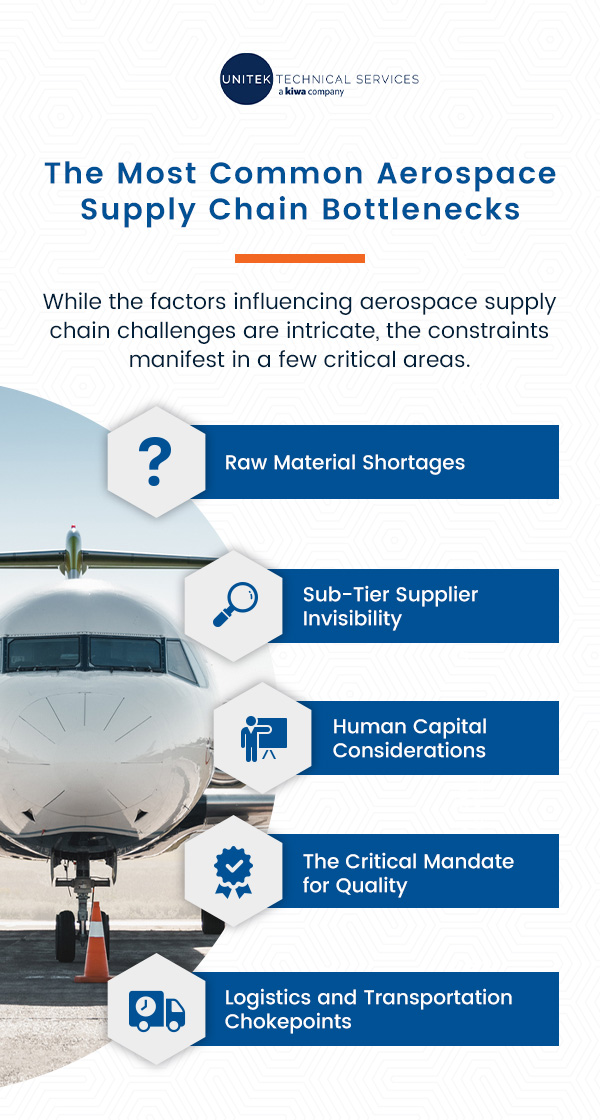
The Most Common Aerospace Supply Chain Bottlenecks
While the factors influencing aerospace supply chain challenges are intricate, the constraints manifest in a few critical areas. These issues can have cascading effects, where a single point of disruption may contribute to operational interruptions and program delays.
Raw Material Shortages
The aerospace industry’s structural integrity and performance depend on a handful of essential materials.
- Aerospace-grade titanium: Essential for high-stress structural components and engine parts due to its strength-to-weight ratio and corrosion resistance.
- High-strength aluminum alloys: Used extensively in airframes and structural assemblies where weight reduction is critical.
- Specialty alloys and superalloys: Required for turbine blades and hot-section components that must withstand extreme temperatures and pressures.
- Advanced composites: Provide strength while reducing overall aircraft weight.
The majority of these materials are imported. The geopolitical complexity of these supply chains presents a significant consideration. For example, a select few foreign players control the majority of aerospace-grade titanium production, creating a vulnerability for Western manufacturers that depend on these materials.
Semiconductor shortages add to material considerations. Even a single unavailable chip can delay the delivery of an entire aircraft. Avionics, flight control systems and electronic components all require specialized semiconductors that face extended lead times and allocation constraints. These situations can lead manufacturers to retain partially completed aircraft while awaiting electronic components, impacting capital efficiency and production capacity.
Sub-Tier Supplier Invisibility
The multi-tiered structure of the aerospace supply chain introduces areas for enhanced visibility. While an OEM maintains a direct relationship and clear oversight of its Tier 1 suppliers, that visibility diminishes rapidly at Tier 2 and Tier 3 levels. These tiers are where potential quality issues, process deviations and unauthorized materials may arise.
Lack of visibility prevents proactive risk management, transforming manageable issues into program-level crises that affect production schedules and jeopardize delivery commitments.
Without knowing who the sub-tier suppliers are or understanding their capacity and quality constraints, it becomes challenging to predict or prevent disruptions. Issues are typically identified when a nonconforming part or a delivery delay reaches the Tier 1 level. For example, when a Tier 3 supplier experiences financial challenges, labor or capacity constraints, the OEM often learns about it only after parts that do not meet specifications enter the supply chain.
Human Capital Considerations
The aerospace industry is experiencing a significant demographic shift, with the retirement of an experienced generation of skilled professionals. This trend has led to a loss of invaluable institutional knowledge across machining, manufacturing, quality and logistics that is often undocumented. A wealth of process knowledge and quality best practices transitions out of the workforce with retiring employees.
Long onboarding and training timelines compound the lag before new hires become productive. Complex manufacturing processes, stringent quality requirements and specialized tooling all require extensive training periods. The pipeline for new talent remains insufficient to meet demand in several critical roles, particularly in engine and component manufacturing.
This skills gap impacts quality and production throughput. Experienced technicians can identify potential nonconformances through visual inspection and a deeper understanding of processes that newer employees lack. The learning curve for AS9100 compliance, and advanced manufacturing techniques extends beyond basic technical training.
The Critical Mandate for Quality
Aerospace is one of the most heavily regulated industries in the world. Compliance requirements add friction to contingency sourcing and alternative supplier qualification, creating several distinct challenges related to quality and compliance:
- Inadequate quality systems: Defect prevention requires a robust quality management system, but many potential suppliers struggle to maintain one that meets stringent compliance requirements, leading to supply bottlenecks.
- Certification constraints: New aircraft certification timelines have stretched from one to two years to four to five years. This extended timeline slows the qualification of alternative parts and new suppliers, creating rigidity in the supply chain and making it difficult to respond quickly to disruptions.
- Counterfeit part infiltration: The acute threat of counterfeit parts disrupting the supply chain is growing. These components, which can compromise an entire multi-million dollar system, often enter the market through unauthorized channels that bypass normal quality controls and traceability systems.
Logistics and Transportation Chokepoints
The aerospace industry is built on precision timing. Any logistics friction, such as port congestion, freight cost volatility or capacity constraints, impacts delivery schedules. These chokepoints can cause an aircraft on ground (AOG) event, where airlines may incur significant costs related to lost revenue, crew repositioning and passenger accommodation.
This friction also manifests as critical production imbalances. This mismatch in the supply chain, where airframe production outpaces engine production, creates a large physical logjam at final assembly.
Inventory positioning in this global industry presents a high-stakes balancing act to avoid creating bottlenecks. Suppliers must avoid the high carrying costs of excessive global inventory while ensuring the right parts are at the right forward locations.
Diagnosing Your Blockages
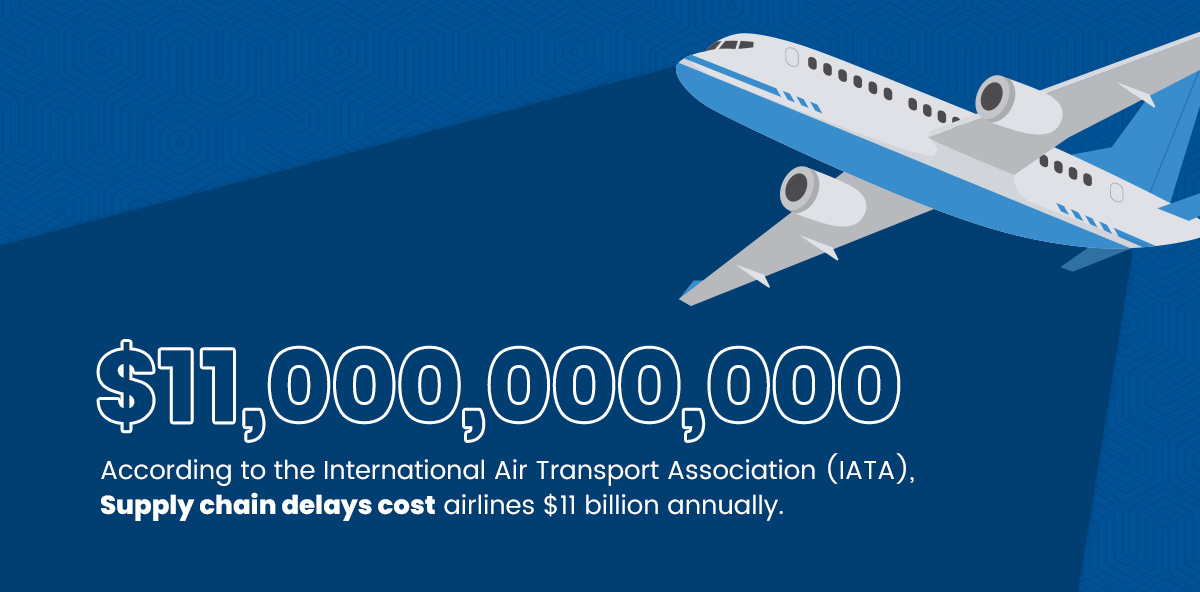
Aerospace supply chain bottlenecks are operational inconveniences that hemorrhage cash at an alarming rate. According to the International Air Transport Association (IATA), Supply chain delays cost airlines $11 billion annually. To avoid contributing to this cost, organizations must first diagnose their unique vulnerabilities by following this framework:
1. Map Your Supply Chain End-to-End
Effective diagnosis starts with transparency. It requires a concerted effort to identify your Tier 1 suppliers and the critical Tier 2 and Tier 3 suppliers they depend on. This mapping exercise flags sole-source dependencies and long-lead-time parts before they become crisis points.
Try the following methods:
- Supplier surveys and questionnaires: Requiring Tier 1 suppliers to disclose their critical sub-tier suppliers and manufacturing locations.
- Collaborative process mapping: Working directly with key suppliers to surface hidden concentration risks before they become crises.
- Formal quality audits: Using AS9100 audits and supplier assessments to demand transparency down the chain and verify sub-tier capability.
The goal is to create a comprehensive view of your supply network, beyond direct contractual relationships. This visibility enables predictive risk management rather than reactive firefighting.
2. Build an Early Warning System
An early warning system involves monitoring a wide range of data points beyond just on-time delivery. Organizations that succeed use artificial intelligence or analytics tools to detect supply chain risks before they impact production and plan mitigation strategies in advance.
To be effective, this system should track:
- The financial health scores of sub-tier suppliers, including credit ratings, debt levels and cash flow indicators that signal potential bankruptcy or capacity reduction.
- Geopolitical risk alerts for regions where suppliers operate, including trade policy changes, export restrictions and political instability that could disrupt material flow.
- Raw-material price and availability indices indicating scarcity, allocation or price spikes for critical materials such as titanium and specialized alloys.
- Regional labor market data, such as strikes, wage pressure and workforce availability that could impact supplier production capacity and lead times.
3. Conduct Root Cause Analysis
When a nonconformance or delay occurs, the standard response is often a quick fix. A more disciplined approach yields better long-term results. A formal root cause analysis (RCA) encourages teams to investigate thoroughly, moving past the immediate symptom to identify the fundamental cause.
For example, a late part delivery may initially appear to be a supplier scheduling issue. RCA might reveal that the Tier 3 supplier had a capacity constraint they never communicated, which caused the Tier 2 supplier to miss their commitment, which then impacted the Tier 1 delivery.
Organizations that skip RCA end up treating symptoms rather than causes. The same problems recur in different forms, consuming resources and degrading customer confidence. Documented RCA also satisfies AS9100 requirements for corrective action.
4. Benchmark Supplier Performance Data / Score Carding
Historical delivery and quality data enable organizations to model and predict future risk exposure. A supplier with declining on-time delivery performance over three consecutive quarters signals a capacity or process control issue that requires intervention. Benchmarking helps identify at-risk suppliers before they become a crisis.
Establish clear, consistent KPIs, such as on-time delivery and quality metrics, for all suppliers. These metrics must be systematically tracked and regularly reviewed to identify trends before they become problems.
How to Establish Aerospace Supply Chain Visibility and Control
Achieving true supply chain transparency and control in the high-stakes aerospace environment requires a deliberate, hands-on strategy executed with deep expertise. The following methods are essential components of a resilient supply chain:
Strategic Source Inspection
Strategic source inspection is the practice of deploying highly qualified quality professionals into a supplier’s facility to verify product conformance before it ships. This targeted, risk-based approach offers several key benefits:
- Catches defects at the source, preventing them from propagating through the supply chain and causing costly rework or AOG events downstream.
- Provides real-time, on-the-ground intelligence, offering visibility into a supplier’s actual processes, capabilities and potential quality risks that audits alone cannot reveal.
- Ensures requirements are understood and met, verifying that specifications are correctly interpreted and implemented before problems can impact your production line or delivery commitments.
This approach mitigates supply chain risk by intercepting nonconformances before they enter your facility. It also provides data for supplier performance tracking and identifies candidates for supplier development programs.
Supplier Development
Supplier development is the process of working with suppliers to improve their processes, quality systems and overall capabilities. It moves beyond identifying problems during an audit to helping the supplier implement robust and lasting corrective actions.
This collaborative approach can involve hands-on training, process optimization and sharing best practices. The goal is to turn a high-risk supplier into a reliable partner capable of consistently meeting AS9100 requirements and customer specifications. Supplier development programs typically address process capability, quality system maturity and workforce training.
The investment in supplier development pays dividends through improved on-time delivery, reduced defect rates and greater supply chain stability. It also builds strategic relationships that provide a competitive advantage during periods of high demand or material scarcity.
Capacity Audits
A capacity audit is a detailed, on-site assessment of a supplier’s production capacity. It involves a deep analysis of their:
- Equipment and maintenance schedules: Understanding machine availability, preventive maintenance practices and potential downtime risks.
- Workforce skill level and availability: Assessing whether the supplier has sufficient trained personnel to meet production commitments and what happens during peak demand.
- Current shift patterns and potential for flex capacity: Determining if the supplier can scale production through additional shifts or weekend operations when needed.
- Subtier supplier constraints and raw material inventory: Identifying bottlenecks below the Tier 1 level that could limit output regardless of the supplier’s internal capacity.
- Process obstructions and true throughput rates: Measuring actual production rates rather than theoretical capacity to understand realistic delivery timelines.
Capacity audits help organizations understand suppliers’ capacity constraints. They provide the data needed to make informed decisions about load balancing across the supply base.
Ensure Supply Chain Visibility With Unitek Technical Services
The aerospace industry’s supply chain challenges are immense, but they are manageable. Resilience is not a passive quality. It is actively built through strategic oversight, transparency and a proactive commitment to quality at every tier of the supply chain.
Transforming a high-risk, low-visibility supply chain into a transparent and resilient strategic asset requires specialized expertise. Organizations that succeed deploy experienced technical specialists who understand AS9100 requirements, process failure mode and effects analysis methodologies, and the unique demands of aerospace manufacturing.
Unitek Technical Services a Kiwa Company provides expert, on-the-ground technical services designed to ensure visibility and control across your entire supply chain. From strategic source inspection and capacity audits to comprehensive supplier development programs, our seasoned team helps aerospace and defense organizations identify and manage risks earlier in the production cycle.
Contact us today to build a more resilient aerospace supply chain.